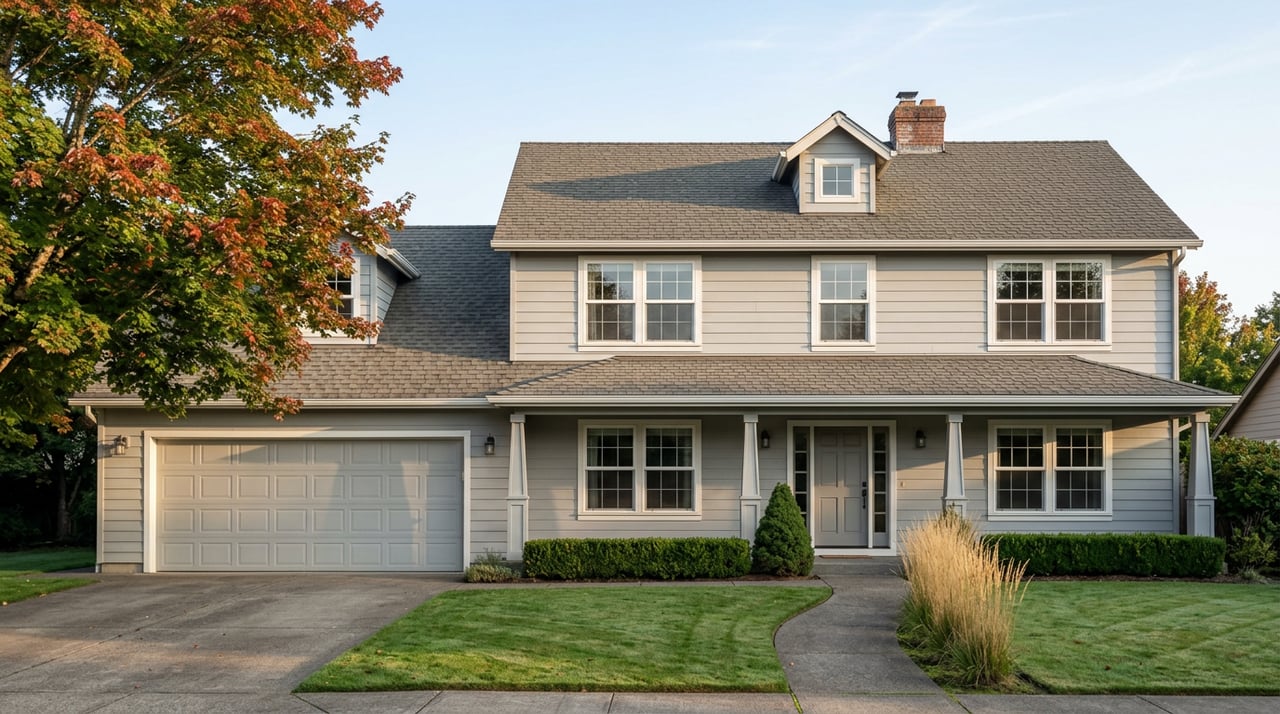
If you own or are about to buy an older home inside Littleton's city limits, you may qualify for a state income tax credit if the property has an eligible historic designation. Homeowners in Highlands Ranch, Centennial, Lakewood, and most of the Denver metro simply do not have access to this benefit. According to a Colorado Legislative Council Staff report, Colorado only extends this benefit to residents of cities that have earned Certified Local Government status from the state, and Littleton is one of just thirteen: Durango, Georgetown, Greeley, La Junta, Lake City, Littleton, Longmont, Manitou Springs, Pagosa Springs, Saguache, Starkville, Steamboat Springs, and Telluride.
Here is the part that surprises most sellers and buyers when they learn about it. Almost nobody in Littleton actually uses this credit. A state review of the program found that residential participation has stayed roughly flat since the program relaunched in 2016, even as commercial claims climbed. The credit sits there, available, mostly unclaimed, while a separate and much stricter piece of the same designation—the design review required before you can touch a window or the siding, as set out for window replacements in the city's Guidelines for Replacement of Historic Windows—catches people who never expected it. Understanding both halves of that trade before you write an offer or list a house changes how you plan a renovation and how you price a home that qualifies.
What Certified Local Government Status Actually Unlocks
According to History Colorado, Colorado's residential Historic Preservation Tax Credit is available to owners of any property listed on the State or National Register of Historic Places, designated as a local landmark, or recognized as a contributing structure inside a designated historic district, as long as the city or county doing the designating is a certified local government. Littleton has held that status, which is why homes tied to its historic program can access a credit that an equally old house one town over cannot.
The mechanics matter more than the headline. For residential projects, the state requires a minimum of $5,000 in qualified rehabilitation expenses. There is no completion deadline once your project plans are approved, but only work completed within 24 months before that approval counts toward the credit. A separate commercial version of the program exists with its own funding pools and caps, and the Colorado Office of Economic Development and International Trade says that commercial track just tightened its own lookback window from 24 months to 12 months starting January 1, 2026. That change applies to commercial applicants, not homeowners, but it is a reminder that the state revisits these rules often enough that anyone planning a project should confirm current terms before spending a dollar.
Not Every Old House Qualifies, and That's the Point
A citywide historic buildings survey conducted in 2000 and 2001 documented 604 properties across Littleton. Of those, 11 were found eligible for the National Register, one grouping was identified as a potential National Register district, and 52 were flagged as potential local landmarks, with one additional area identified as a potential local landmark district. That is a small fraction of the total. Most older homes in Littleton were surveyed, cataloged, and left exactly where they were: interesting, but not regulated.
That distinction is the whole ballgame for a buyer. A home built in 1910 does not automatically carry landmark status, a design review requirement, or tax credit eligibility. It has to be formally designated, either as an individual landmark or as a contributing structure inside an established historic district, before any of that applies. Littleton's two clearest examples of designated territory are the nationally registered Downtown Littleton Main Street Historic District and the newer Mid Mod Mile along Littleton Boulevard, which recognizes the city's mid-century modern buildings from the 1950s through the 1970s. Individual landmarks scattered outside those districts include sites like the Rough and Ready Flour Mill site, which traces back to 1867 and helped start the town's economy, the Town Hall Arts Center, built in 1920 and still operating as a theater, and Geneva Lodge, which the city itself owns.
There is a third category worth knowing about if you are selling. Historic Littleton, the nonprofit that partners with the city on preservation, maintains what it calls the Legacy List: buildings that tell an important piece of the city's story but have not been formally designated. A home on that list carries no COA requirement and no tax credit eligibility yet, but it is on the radar for future designation, which is worth disclosing and worth pricing into the conversation either way.
Here is how the three tiers actually break down:
| Status | Certificate of Appropriateness required? | Tax credit eligible? |
|---|---|---|
| Designated local landmark | Yes, for exterior work | Yes |
| Contributing structure in a historic district | Yes, for exterior work | Yes |
| On the Legacy List, not yet designated | No | No |
| Older home with no designation or listing | No | No |
The Approval You Don't Expect
If your home falls into one of the top two rows, exterior work triggers a Certificate of Appropriateness under Chapter 8 of the city's Unified Land Use Code, administered by the city's Community Development department alongside the Historic Preservation Board. This is where the tax credit's upside runs into its cost.
Take something as ordinary as replacing windows. The city's own guidelines spell out a process:
- Request a pre-application meeting with the city's preservation planner to review your existing windows and discuss what the application will require.
- Submit the Certificate of Appropriateness application. Straightforward projects that meet the guidelines can be reviewed administratively by staff without a public hearing.
- For properties on the Littleton Historic Register that sit outside the Downtown core, the city allows more flexibility for windows not visible from a public street.
- For historic buildings inside Downtown specifically, the rule is stricter: windows cannot be visible from either the street or the alley behind the building.
That alley clause is the detail that trips people up. Most historic districts regulate what a passerby sees from the sidewalk. Littleton's Downtown properties also have to think about the view from the service alley, which means a rear-facing kitchen window on a converted storefront can require the same level of review as the front bay window.
None of this makes the process unreasonable. It means a homeowner planning to modernize an old house should build in time for a planning meeting and a review cycle before ordering materials, not after.
Why the Credit Still Sits on the Table
Put the two halves next to each other and the pattern becomes clear. The state built a real financial incentive, capped at nothing for residential projects and requiring only a $5,000 spend to qualify, specifically to reward owners in cities like Littleton for keeping old buildings intact. The state's own audit of the program found that residential claims have barely moved since 2016 while commercial use of the same credit grew substantially over that period.
The likely explanation is not that Littleton homeowners dislike free money. It is that the credit requires knowing you're eligible in the first place, and eligibility is tied to a designation process most people never think to check before they buy. A house can sit inside the Downtown Main Street Historic District, qualify for the credit the day you close, and never get claimed simply because nobody asked the question at the right point in the transaction.
What This Means If You're Buying or Selling
Before writing an offer on an older Littleton home, or before listing one:
- Confirm whether the property is a designated local landmark, a contributing structure in the Downtown or Mid Mod Mile districts, or listed on the Legacy List. Each status changes both your renovation timeline and your tax picture.
- If you're planning exterior work, build a pre-application meeting with the city's preservation planner into your renovation schedule before you budget materials or set a contractor start date.
- If the home qualifies for the state credit, keep receipts and documentation from the start. The 24-month lookback on qualified expenses means work done too far in advance of plan approval won't count.
- If you're selling a home with landmark or contributing status, mention the tax credit in your listing conversation. It's a genuine financial detail that a buyer comparing an older Littleton home to a comparable house in a neighboring suburb won't find anywhere else.
A Few Quick Answers
Does every home in Downtown Littleton require a Certificate of Appropriateness for exterior work? Only if the property is a designated landmark or a contributing structure within the district. Not every building inside the district boundary carries contributing status, so confirm your specific property's designation with the city before assuming either way.
Can I lose the tax credit if my renovation takes longer than expected? No. Once your project plans are approved, there's no completion deadline. The 24-month clock applies to when the qualified expenses occurred relative to plan approval, not to how long the work takes afterward.
What if I just want to repaint or replace mechanical systems? Interior work and routine repairs generally fall outside historic review. It's exterior changes on designated properties that trigger the Certificate of Appropriateness process.
Is the tax credit only available for homes inside the Downtown district? No. Any property that is individually landmarked, listed on the State or National Register, or a contributing structure in any of Littleton's designated districts can qualify, provided the project meets the $5,000 minimum spend.
Buying or selling a home with this kind of history attached is a different conversation than a standard transaction, and it rewards having someone who has actually read the ordinance walk through it with you. If you're weighing an older Littleton property, whether it's a landmark, a Legacy List house, or something in between, reach out to Melinda Sanders for a straight read on what the designation means for your timeline, your renovation plans, and your bottom line.
This article is general information, not legal, tax or financial advice. Consult a qualified professional about your situation.